

For over 15 years, since 2009, we have manufactured and supplied tactical, military, and outdoor products for professionals and enthusiasts who face challenging scenarios. We have learned that survival depends on an integrated system of skills, reliable gear, and the pack that organizes it all. A weakness in any part can affect the entire setup.
This guide goes beyond simple checklists. It explores five core survival skills with a focus on practical application, showing how quality tactical gear—particularly your pack—can enhance your effectiveness. We then explain how to organize a layered survival kit using principles from professional tactical equipment.
Part 1: The 5 Core Skills – Executed with Intent
Shelter & Security: Your First Priority
Exposure to cold, wind, or wet conditions can lead to hypothermia, which can become life-threatening faster than many realize in harsh environments. The immediate goal is to stop heat loss and establish a secure base.
-
The Tactical Angle: Choose a shelter site with attention to visibility, defensibility, and escape routes. Your pack can serve as an initial component of shelter.
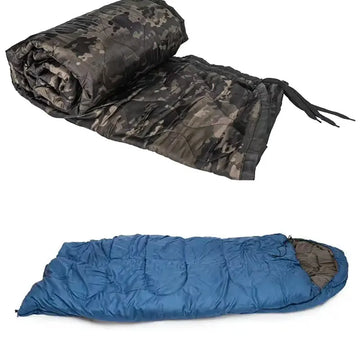
- Gear Integration: Tactical packs feature MOLLE/PALS webbing that allows you to attach a rainfly or bivvy externally for quick deployment. A durable, water-resistant pack can also act as a windbreak or elevated seat when placed on its side.
Water Sourcing: From Procurement to Practical Carry
Dehydration can impair judgment and physical performance relatively quickly, often within hours or days, depending on conditions.
-
The Tactical Angle: Approach water in stages: locate, collect, purify, and store. Keep the necessary tools accessible.
- Gear Integration: A dedicated hydration sleeve in your pack protects a bladder and keeps it separate. Side pockets provide easy access to a filter bottle. Internal modular pouches organize purification tablets or drops, while abrasion-resistant materials handle repeated contact with rough terrain near water sources.
Firecraft: The Art of Reliable Ignition
Fire provides warmth, signaling, morale support, and a means to purify water.
-
The Tactical Angle: Build redundancy with multiple ignition methods to avoid failure, such as everything becoming wet.
- Gear Integration: Waterproof pockets or a dedicated admin pouch keep ferro rods, storm matches, and lighters secure. External MOLLE webbing can hold a protected tinder container for immediate use in wet conditions.
Navigation: Moving with Purpose
Inefficient movement wastes energy and increases risk. Accurate navigation preserves resources.
-
The Tactical Angle: Tools must remain usable under stress, low light, or while wearing gloves. Protect paper maps from damage.
- Gear Integration: A top lid or admin panel offers quick access to a map case, compass, or GPS. MOLLE on the shoulder straps allows mounting a compact device in view. A pack's rigid frame sheet provides a stable surface for reading maps in wind.
First Aid & Self-Recovery: Treating the Tool (You)
Even minor injuries can escalate and limit mobility in remote settings.
-
The Tactical Angle: An IFAK (Individual First Aid Kit) focuses on rapid response to serious traumatic injuries, such as severe bleeding. Organization is essential for use under stress.
- Gear Integration: Mount a dedicated IFAK pouch externally via MOLLE for one-handed access from either side—often in a visible color like red. Use labeled internal organizers for categories like bleeding control or airway management. Comfort features, such as padded straps and hip belts, help prevent strain injuries during extended carry.

Part 2: Building Your Loadout: The Pack-as-Platform System
Treat your tactical pack as a modular platform rather than a simple bag. This approach works well for a 72-hour get-home or evacuation kit.
| Layer / Zone | Purpose | Example Items | Pack Integration Tip |
|
Immediate Access (Admin Pouch, Belt, Shoulder) |
Tools needed in seconds without removing the pack | Lighter, knife, flashlight, compact trauma kit, GPS | Use zippered pouches on the belt or harness. Attach smaller modular pouches to shoulder straps via MOLLE |
|
Main Compartment (Core Load) |
Sustainment items for shelter, water, food, and warmth | Tarp, sleeping bag, water filter, stove, rations, extra clothing | Organize with internal dividers or color-coded sacks (e.g., orange for shelter, blue for water). Place heaviest items close to your back. |
|
External Attachment (MOLLE, Compression Straps) |
Bulky or frequently used items | Rain layer, trekking poles, sleep pad, tool, extra water | Secure pads with compression straps. Add custom pouches for gloves or tools using PALS webbing. |
|
Hydration Zone (Dedicated Sleeve/Side Pockets) |
Water access while moving | Hydration bladder, filter bottle, purification items | Internal sleeve protects the bladder. Stretch pockets enable one-handed bottle access. |

Why a Tactical Pack is the Foundation of Your System
We design tactical packs as integrated systems for real-world use. Key features include:
-
Modularity: The MOLLE/PALS grid allows easy reconfiguration of pouches for different needs, such as switching from medical to tool storage.
-
Organization: Logical compartments enable access by feel, reducing search time in low-light or high-stress situations.
-
Durability: High-denier ripstop fabrics and reinforced stitching withstand heavy use without failure.
- Ergonomics: Adjustable harnesses and load-bearing elements distribute weight efficiently to support prolonged movement.
For more on core survival priorities like the "rule of threes," see this overview from Wikipedia.

Expandable, durable tactical outdoor backpack
Conclusion
Effective preparedness combines skills, knowledge, and equipment into a reliable system. By prioritizing modularity, accessibility, and durability in your kit—centered on a quality tactical pack—you build capability that supports you rather than hinders.
Next step: Review your current gear. Ask if it forms an organized system and allows fast access to essentials. If improvements are needed, explore our tactical backpacks designed for these principles.